
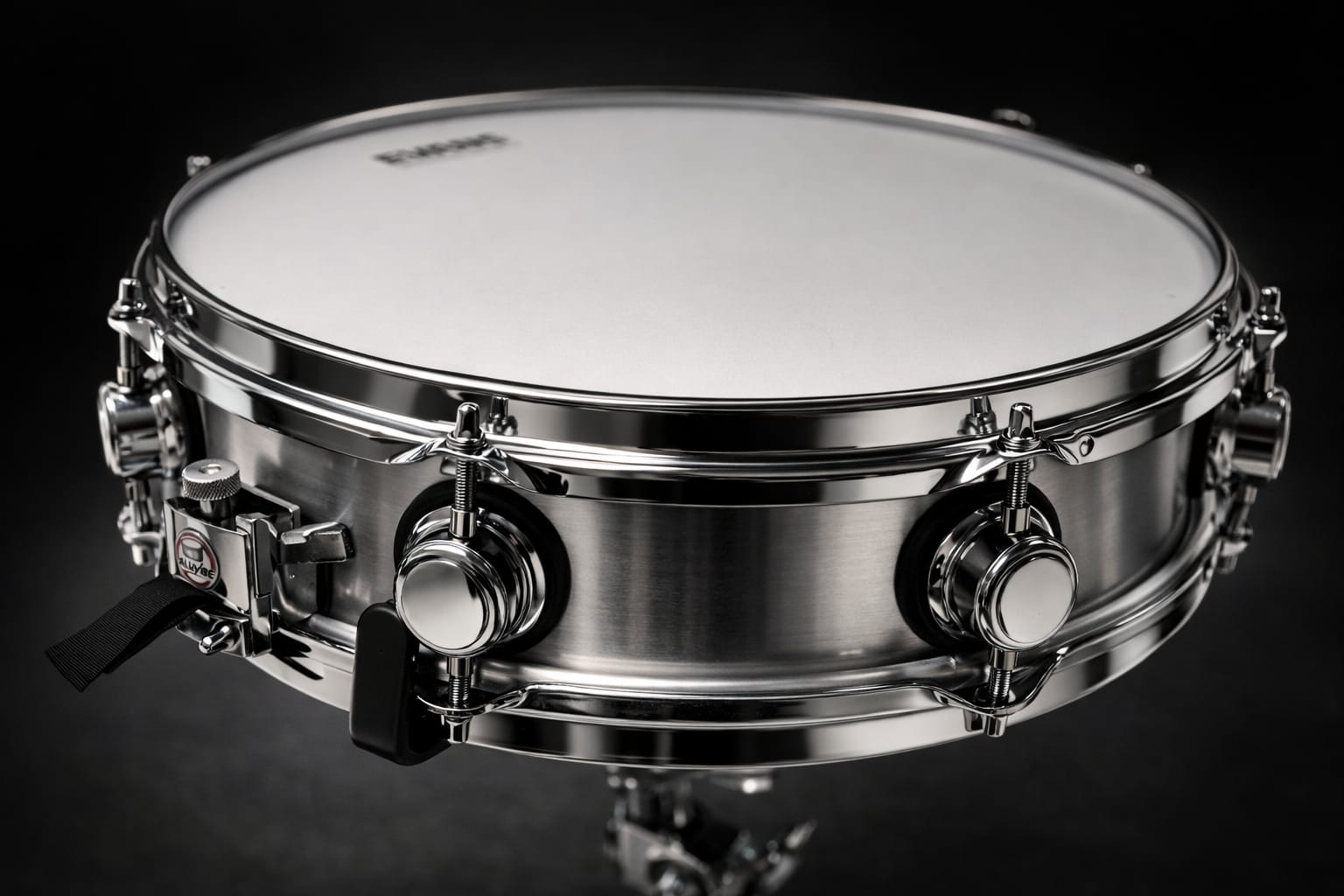
Material and traceability
Shells are made from aluminium belonging to the Al-Mg-Si family of alloys, selected for its balance of formability, mechanical strength, dimensional stability and vibrational response.
AluVibe’s raw material is supplied with quality certificates, casting reports, chemical analysis and mechanical test results to ensure full traceability. Each batch is also inspected by qualified personnel upon receipt before it is released into production.
Manufacturing flow and laser welding
Only material that meets AluVibe standards is released into production: the sheet is cut to size, roll-formed precisely to the nominal diameter, and then laser welded along the longitudinal seam.
Laser welding is a structural choice: energy is concentrated on an extremely small area, minimizing thermal impact and delivering metallurgical continuity and geometric stability across the entire shell.
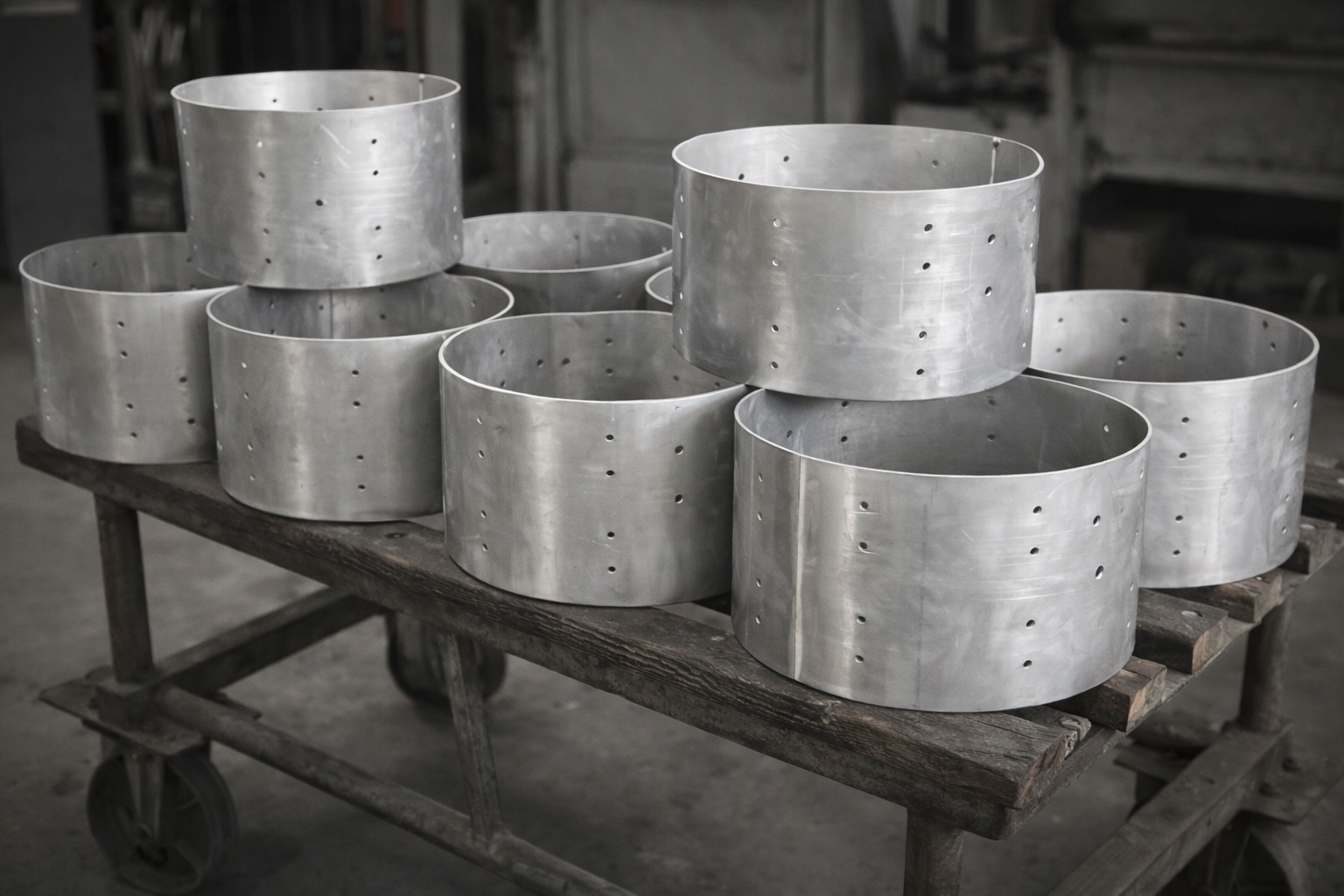
Thermal stabilization and geometric control
After welding, each shell undergoes artificial ageing in an oven at 170 °C, a controlled heat treatment that stabilizes the microstructure and equalizes mechanical behavior around the entire circumference.
Once the thermal step is complete, each shell is dimensionally verified using laser scanning metrology capable of detecting deformations or imperfections not visible to the naked eye. Only shells that fully pass all checks proceed to the next stages.
Surface finishes and hand assembly
Surface treatments follow, including polishing and electroplating, performed while respecting tolerances and the shell’s acoustic characteristics.
Final assembly is performed entirely by hand by highly qualified personnel, with attention to mechanical precision, aesthetic coherence and the instrument’s overall sonic outcome.
Acoustic result
The result is a snare that is light yet structurally solid, with high tuning stability, uniform resonance, controlled sustain, and extremely sensitive dynamic response—even at low playing intensity.
The Laser Series is not an artisanal reinterpretation of aluminium: it is industrial engineering applied to sound—where every phase is measured, verified and designed to maximize structural and acoustic integrity.